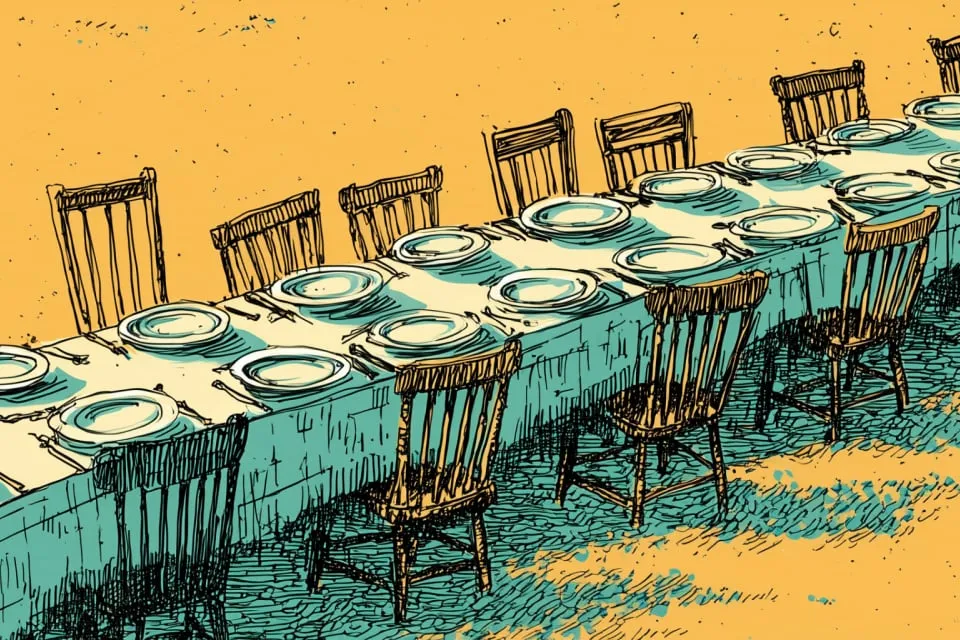
“So You Were on Vacation, Huh?”
“So you were on vacation, huh?”
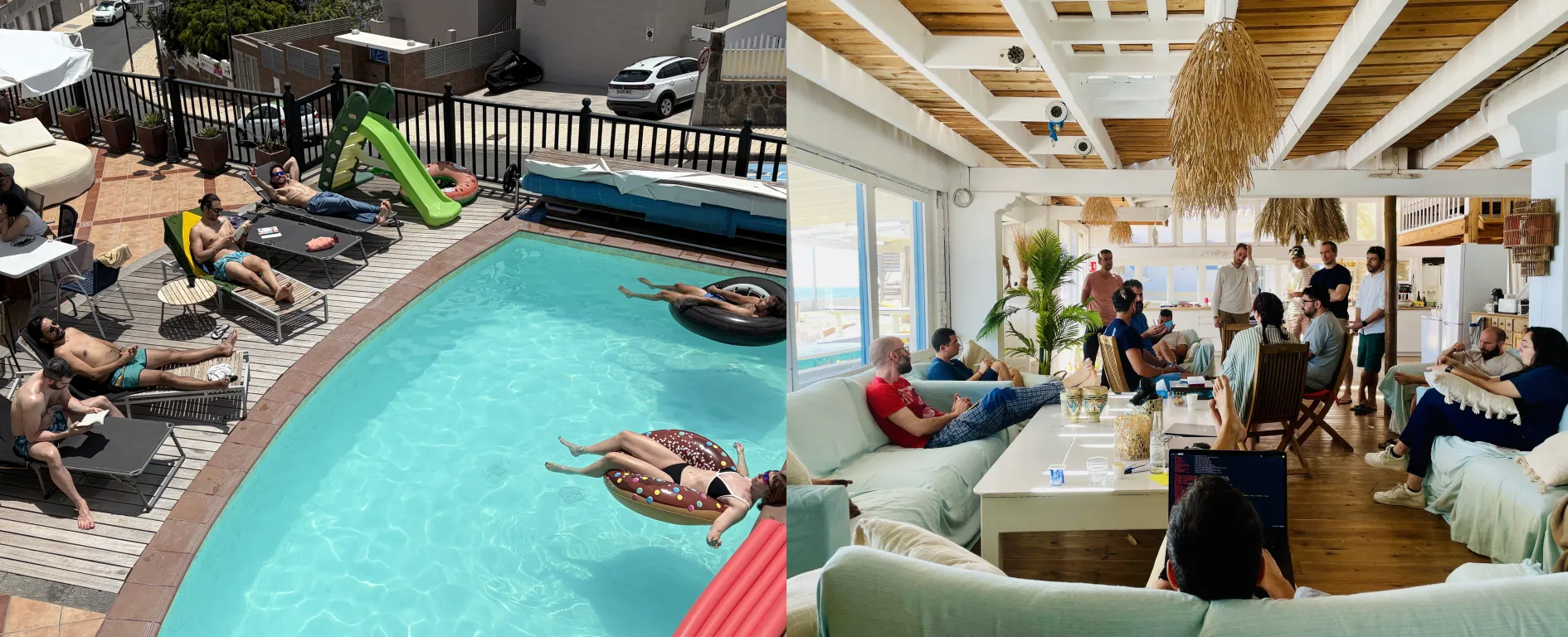
That’s what I hear every time I mention that I spent eight days abroad with all of Buildo. And put that way, it does sound a bit suspicious: sun, sea, a villa, laptops open by the pool, a “chill aperitivo” playlist. The whole thing easy to sell as a “spiritual retreat for startups” to show off on LinkedIn.
The truth is a little different, because we weren’t on vacation. We were on an offsite.
In our case, that meant moving 34 people from Milan to Gran Canaria for eight days. With flights, a villa, workspaces, meals, activities, rental cars, mishaps, allergies, “dramas”, shared rooms, Wi-Fi to get working, and an embarrassing number of notes and reminders on my phone.
I’m Marco, Office Manager at Buildo, and I’ve been organizing our offsite for four years. So yes, from the outside it looks like “a week at the beach with coworkers”. From the inside, it’s a real project, with a real budget, that helps build what Buildo is today.
What the Offsite Is, and Where It Comes From
Friend: “Wait, did literally everyone go?”
Me: Literally everyone. Colleagues, founders, interns, laptops, headphones, chargers, responsibilities, and just enough organized chaos to make things memorable.
The idea, which only looks simple, is to temporarily move the office somewhere else, keeping work going but completely changing the context. It’s not a reward trip, and it’s not the classic corporate event with badges, a conference room, and coffee breaks with sad mini croissants. For eight days we take calls from whichever corner of the house has the best signal, we move projects forward, we answer clients. Except that instead of seeing each other at the office between meetings, we also share breakfasts, lunches, dinners, common spaces, and evenings. The offsite doesn’t pause work, but changes the way we meet while we work.
The offsite wasn’t my idea but a choice made by the partners, convinced that a company’s cohesion isn’t a side effect of work, but something you have to build on purpose. From there came the first rule, still in place today, that the offsite isn’t optional. It’s not a perk for whoever feels like it; it’s a company moment in every sense.
Then the company grew, and the jump from 15 to 25 people was the point where the offsite could no longer be organized “among friends”. At 15, a WhatsApp group and a bit of goodwill were enough. At 25, you need shifts, a per-person budget, criteria for rooms, a plan B for the Wi-Fi, and someone who takes responsibility for making all of it exist. Buildo gave me ownership of the event precisely to give the offsite that structure. Today we’re 34, and the system holds up because it was designed to hold up.
Friend: “I could never spend eight days with my coworkers, I can barely stand them for eight hours at the office!”
Fair enough. Really. But at Buildo it works, and not because we’re magical or all best friends, but because over time we’ve built a context where people get along. And that doesn’t happen by accident. Before the offsite I send out a survey on preferences, habits, and roommate incompatibilities, small things that reduce friction before it even starts. During the offsite, I mix people up on purpose. Even the moments that seem spontaneous all have a logic behind them.
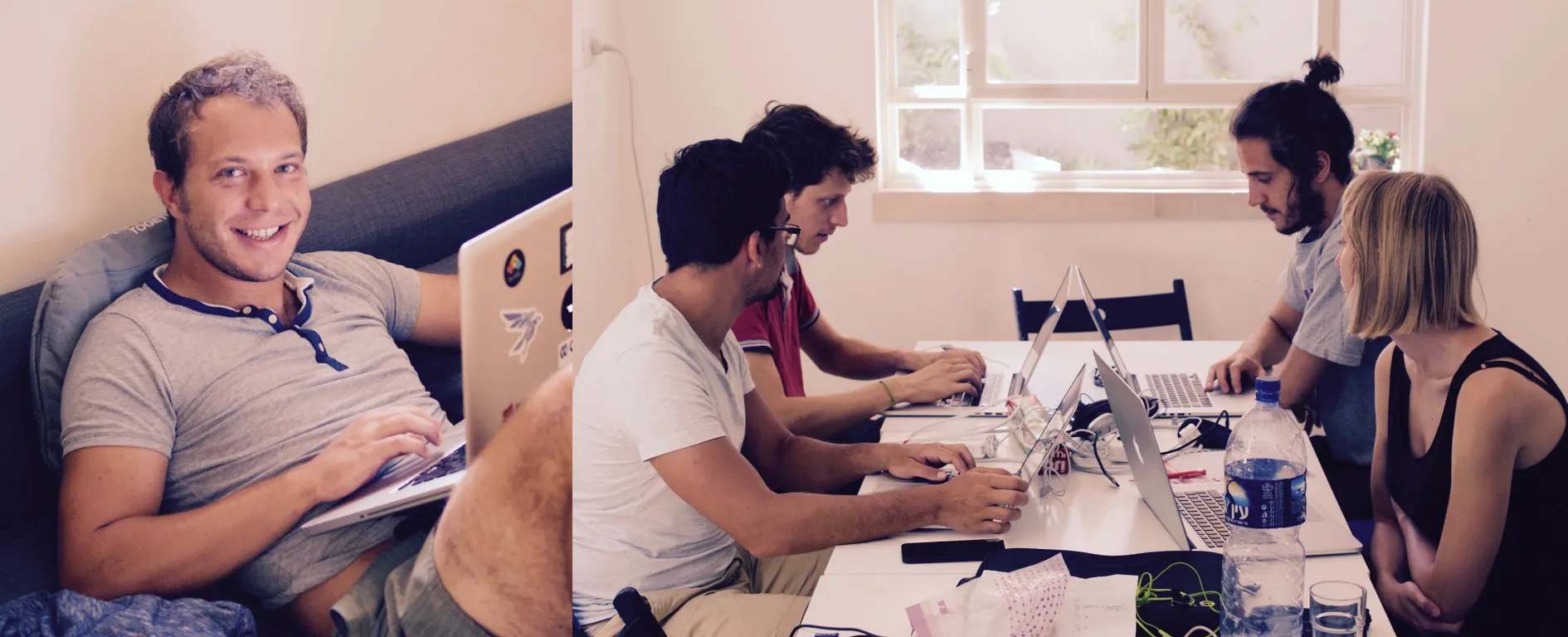
Team Building Can’t Be Improvised (or Forced)
Team building is a phrase that conjures up mandatory activities, the classic scene where you have to fall backwards hoping someone catches you, or facilitators asking you to “express yourself through a metaphor”, or worse, through an emotion.
We went a different way. Formally, the only official team building moment is Saturday. It’s the day we dedicate to an activity that’s been thought through, built, and put on the calendar. In practice, though, the whole offsite is team building. There are fixed points that come back every year, and nobody would call them by that name:
- The brigades, every day, in the kitchen.
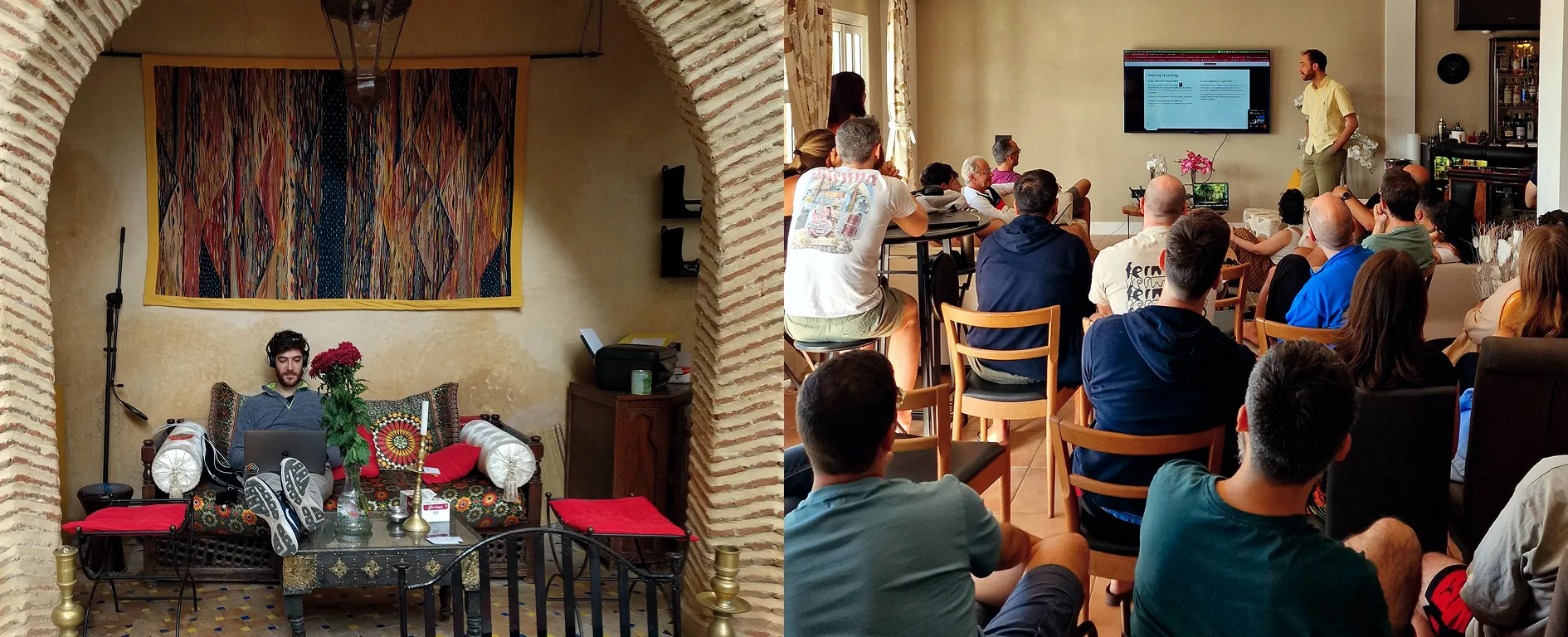
- Friday’s OST, one of our long-standing traditions. Open Space Technology is a format where the agenda isn’t set by the organizers, but proposed by the participants. Anyone can bring a topic they care about, and anyone is free to choose which discussion to join. It works especially well at the offsite, because for once we’re all in the same room.
- Friday night, with aperitivo and dinner out, all together, to celebrate the end of the work week (and the fact that nobody got lost along the way).
- Saturday, the actual activity.
- Free Sunday, which is just as much a design choice as everything else.
The only difference between these moments is the label. And that’s intentional. The things that don’t have “team building” written on them work better, because nobody feels like they’re being tested.
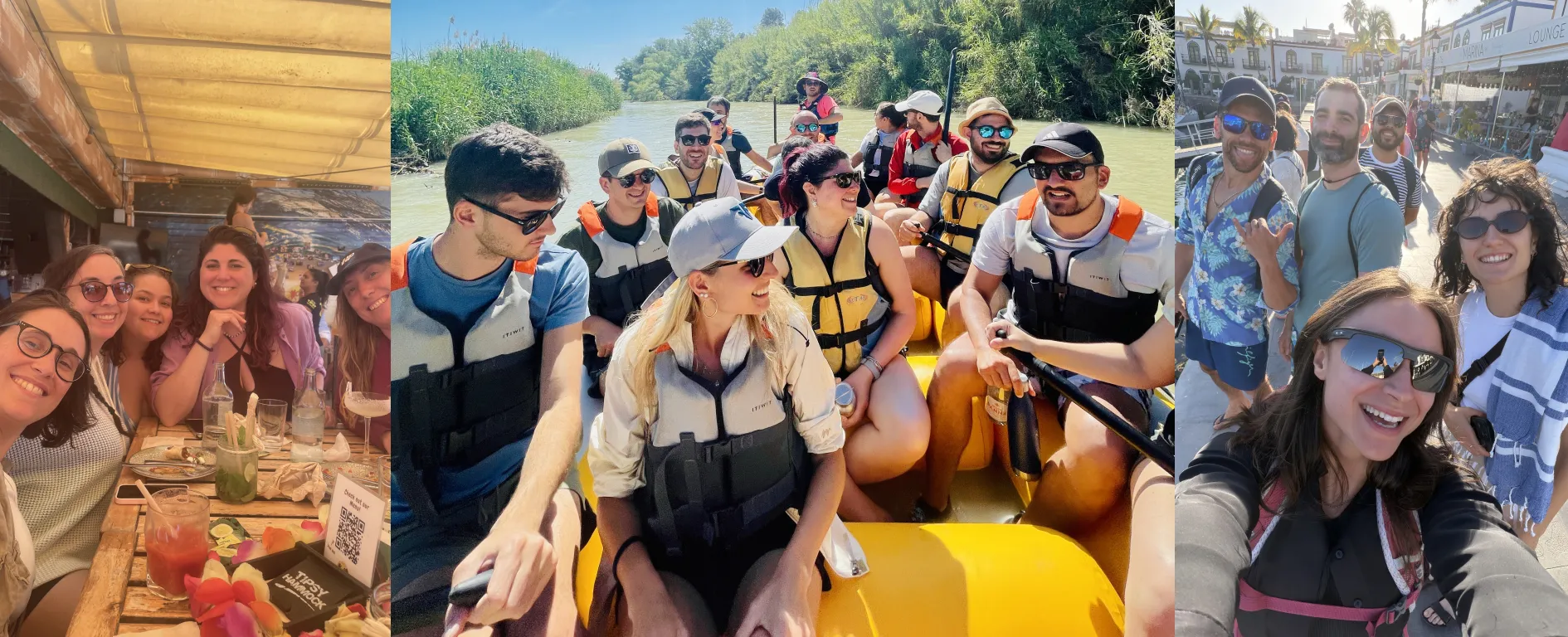
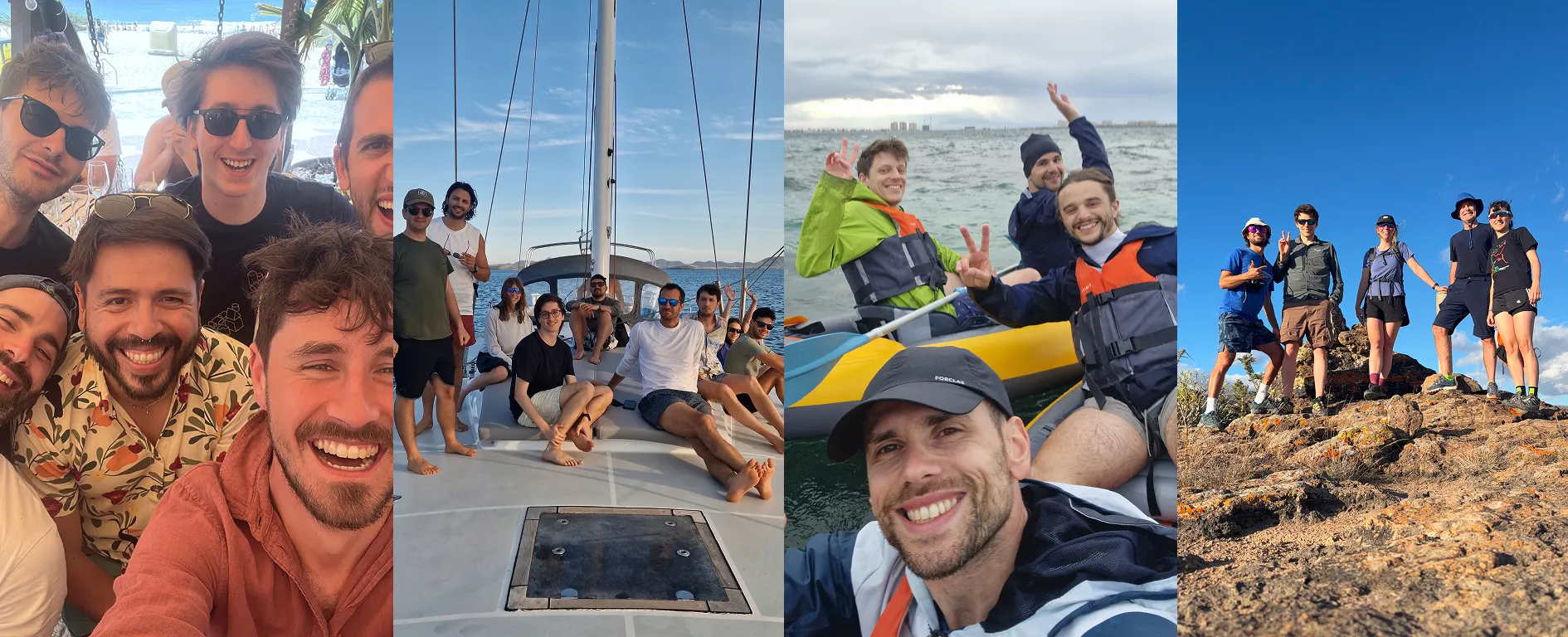
Over the years we’ve changed our minds about Saturday quite a few times, from adventure parks to demanding hikes, and over time we’ve learned that a light experience builds bonds at least as much as an intense day, if not more. This year it was an hour and a half inspired by Pechino Express (Italy’s take on The Amazing Race), in mixed teams: find 20 objects in the area and photograph them, write “offsite 2026” in the sand with our bodies, guess 5 foods blindfolded. Healthy competitive spirit and lots of laughs.
Then came the free day, and that’s where the best thing happened. Without anyone organizing anything, people got moving on their own: some went to the dunes of Playa del Inglés, some stayed at the villa for the jacuzzi and ping pong tournaments, some went to the bar. Activities found, organized, and run by them, with no supervision at all, budget, transport, and return times included. The clearest sign that team building has worked is when people stop waiting for someone to organize things for them.
And the place where I see it happen every year, without exception, is the kitchen.
The Brigades: Cooking for 34 People “Without Losing Your Mind”
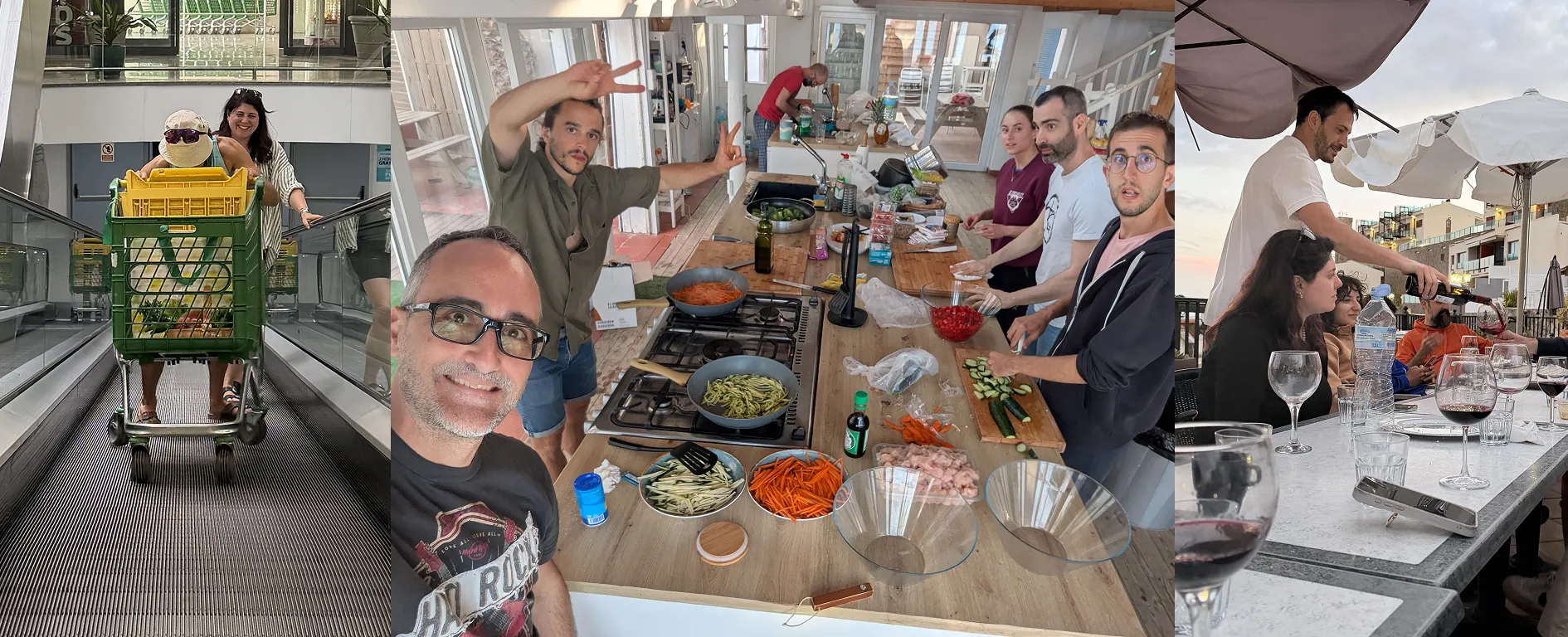
The brigades are groups of about seven people who take turns making breakfast, lunch, and above all dinner for everyone.
Friend: “So you actually cook?”
Me: Seven people, in rotation, cook for the entire company.
Friend: “And you pull it off? Nobody panics and orders delivery?”
Me: We always pull it off… and I can neither confirm nor deny any emotional plan Bs.
Cooking together is real collaboration, and it takes a completely different shape from the one it takes in front of a board or on a call. There’s the one chopping vegetables, the one tasting the sauce, the one supervising without having been put in charge of anything, the one asking “how much salt, though?” with the look of someone making an irreversible decision. To me, cooking is one of the simplest and most concrete forms of care, because it means thinking about others, getting organized, solving problems in real time, and cursing, in no particular order, the vegan colleague, the one who says she’s allergic to tomatoes but actually just doesn’t like them, and the one who won’t eat fish shaped like fish (at which point you might as well not eat fish at all, since all fish are shaped like fish, right?).
That’s why I don’t put the brigades together at random, but mix teams, projects, seniority, and personalities, and I think about who has crossed paths the least during the year. I’m more lenient with room assignments; here, I’m not. It’s the most fun part of my job and also the most delicate, because it’s about designing informal moments that feel spontaneous, but have a precise intention behind them.
There’s Much More Behind an Offsite Than a Nice Villa
From the outside it looks easy: pick a nice destination, book a villa, buy some flights, make a playlist, and off you go. If only. The reality is that an offsite holds together four layers, and none of the four is visible from the outside.
Logistics. You need a place big enough, with suitable common spaces, areas where people can work, and a stable connection, because we can romanticize working with a sea view all we want, but without Wi-Fi it’s just camping with anxiety. Then there are flights, transfers, mishaps, rental cars. This year, to stay within budget, we rented a few fewer and squeezed a bit more into each car. Nobody was left stranded, and we negotiated the compromise with the team rather than imposing it from above.
Budget. We have a per-person budget and, within those numbers, the offsite team and I have carte blanche. A nice kind of freedom and a concrete responsibility, because it means making choices, cutting where needed, and finding a way to keep the cuts from being felt by the people taking part.
Operations. Catering, allergies, quantities, grocery shopping, monitors, adapters, quiet spaces for calls, connection backup, Mac backup, backup of the backup. And then reality: the connection wobbling when there are 18 meetings at the same time at 10 a.m., or the neighbor next door yelling if the music goes past a certain hour. Situations you can’t plan for but have to handle, ideally quietly and without causing panic.
Relationships. Who rooms with whom, how the brigades are formed, who has complementary personalities. It’s the most invisible part of the job, but also the one that, when done well, you can feel.
My job is to hold together the vision and the details, that is, knowing why you’re organizing that experience and, at the same time, remembering that if the colleague who was supposed to drive left their license at home, the philosophical why takes a back seat and you need to find a plan B (and be ready to argue with the car rental company). The point is to keep the behind-the-scenes work from weighing on the people taking part. A bit like in theater, if everything runs smoothly nobody thinks about the lights or the scene changes, but without that work the show wouldn’t exist.
That said, there’s something I say often: I have fun. I suffer and have fun at the same time, because owning something like this is as much an honor as it is a responsibility. An old boss of mine used to always tell me: “if you prepare things well beforehand, you can enjoy the moment when they happen”. And when the organizer is having fun, it shows, and it energizes the people around them.
Why We Do It, and What the Company Gains
Why should a company invest time, energy, and a not-insignificant amount of money to take everyone away for eight days, instead of a company dinner or a Slack message saying “we’re a team”?
Because some things can’t be built just by working together: trust, familiarity, the ability to see your colleagues as whole people and not as names on a calendar. The offsite shortens the distances that day-to-day and remote work stretch out. After a week in which you’ve cooked pasta with someone, lost to them at ping pong, or chatted at eleven at night by the pool over a beer (or maybe more), the cost of asking that person for help collapses. It becomes easier to ask, to give feedback, to trust. It becomes easier to remember that on the other side there isn’t “the design team” or “the people on project X”, but a person.
One effect that would justify the investment on its own is that we bring people who joined just a few weeks ago to the offsite too, including those still on probation. It compresses into eight days an onboarding journey that would otherwise take months, and at Buildo, where work is hybrid between remote and onsite, those months would be even more. Someone who joins in April and comes to the offsite in May comes back knowing the people, not just the names on Slack. And, the less comfortable thing to say, eight days of living together reveal what a person is really like far more than any interview or probation period (and luckily, it’s almost always a confirmation). In a company where collaboration, autonomy, and responsibility aren’t slide-deck values but the way decisions actually get made, none of this is a side benefit: it’s infrastructure.
That said, it’s not a given that it works. Eight days is a long time, and living together amplifies everything: energy, differences, tiredness, the desire to socialize or the desire to disappear for an hour in silence. I can put in as much effort as I want, but the outcome depends mostly on everyone’s willingness. That’s why organizing isn’t just logistics, but experience design.
Five Things I’d Tell Anyone Organizing Their First Offsite
If you’re about to organize one, or if someone at your company just said “come on, let’s do it”, these are the things I wish I’d known beforehand.
1. Send out a survey before booking anything. Dietary preferences, sleeping habits, roommate incompatibilities, accessibility. It’s the cheapest way there is to eliminate friction before it turns into problems to handle on site, where they cost ten times as much.
2. Mix people up on purpose, and more than once. Brigades, teams, and activities are different levers, and if you use the same criteria for all of them, people spend the week with the same three colleagues and the offsite produces no new connections.
3. Leave gaps in the schedule, and defend them. The temptation is to fill every hour, but free hours and free days aren’t wasted time, but the condition for people to organize themselves. And when they do, that’s the signal you’re looking for.
4. Don’t organize it alone. Two or three volunteers, rotated every year, give you perspectives you wouldn’t have on your own, and keep you from being the organization’s single point of failure.
5. Design the emergency exit too. There will be someone who, midweek, needs to disappear for three hours, and if the only way to do that is to feel guilty, you’ve designed it wrong. Opportunities to be together only work if staying out is just as legitimate.
What We Take Home
At the end of the offsite, besides some sleep debt and a non-trivial number of embarrassing photos, we take home conversations that wouldn’t have happened at the office, connections between people who barely knew each other before, and shared memories that become part of the company culture. And the confirmation that getting along isn’t a “nice to have” detail, but something that shapes the way we work.
For me, all the value lies in intentionally creating the conditions for people to get along, not just during the eight days in Gran Canaria, but also in the usual Friday meeting. For that to happen, you must keep the behind-the-scenes work from weighing on the people taking part. When it happens, it means the organization worked.
So no, I wasn’t on vacation. I was somewhere beautiful, yes. I worked in flip-flops, yes. But above all I saw, once again, how much a well-built experience is worth. The offsite works when you come back not just with the feeling of having been away, but with the feeling of knowing the people you work with a little better.
Sure, if it happens in Gran Canaria, working with a sea view makes everything a bit sweeter. But it’s still work. I swear ;)