

A stronger, smoother product delivery process
AI has accelerated software delivery, but now the development process needs to keep up. Software factories make that leap possible: they combine enterprise-grade quality with efficiency, control and consistency.
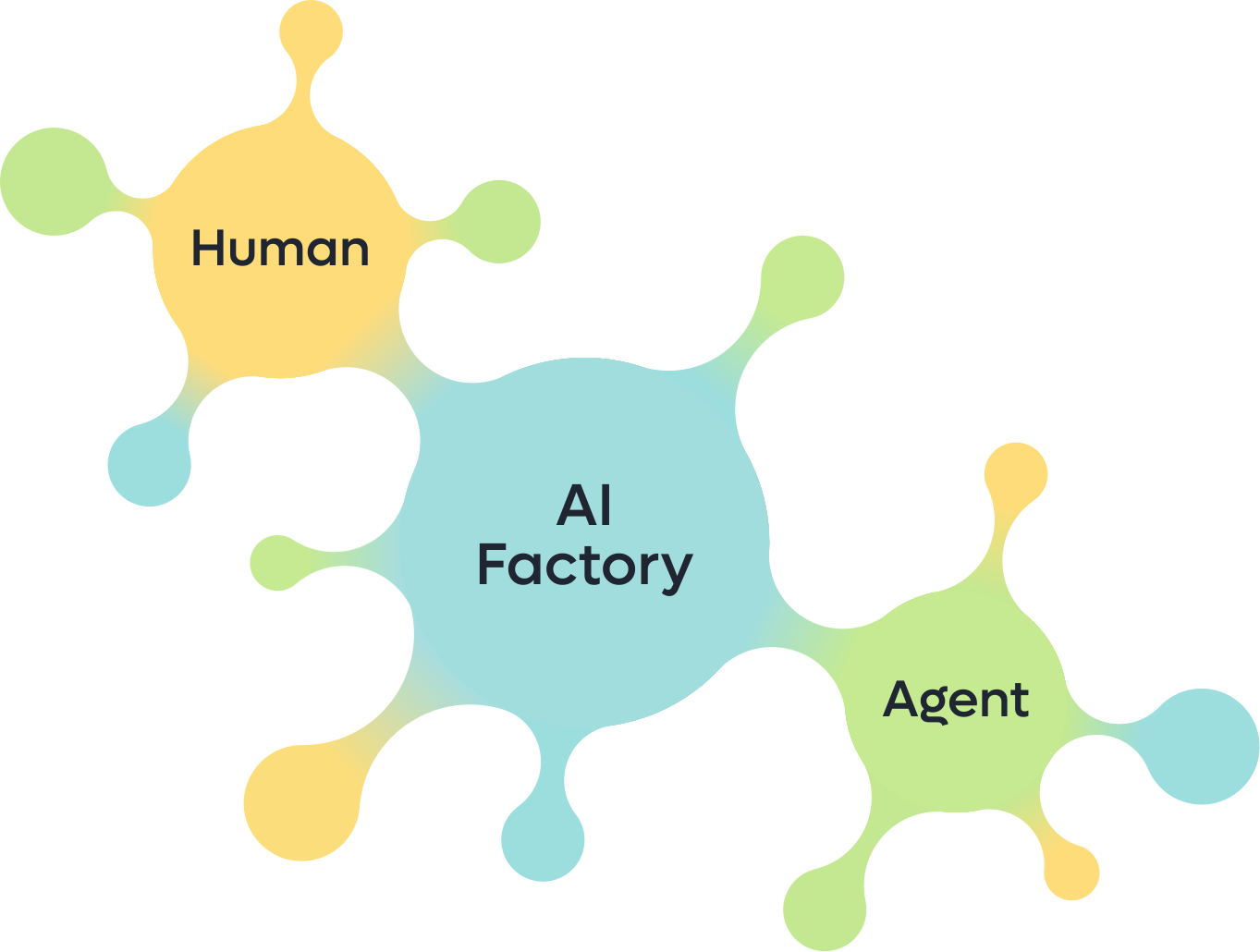
AI grows up. Goodbye coding assistant, hello factory.
Software factories are the natural next step in how tech partners put AI to work. The challenge ahead is about governance: how do you run the development process when agents become part of the team? That's where shared infrastructure comes in, enabling agents to coordinate, collaborate and work as one system.
You write the code
AI is an extension of the developer's desk and editor: it helps write, complete, suggest and generate code. It makes individual tasks faster and boosts personal productivity, but the way the team works stays largely the same.
You coordinate agents
Agents can analyze, build and test parts of the work. But developers are still in the middle: briefing them, passing context around and checking output. Knowledge stays fragmented, without shared memory or central oversight.
You govern the process
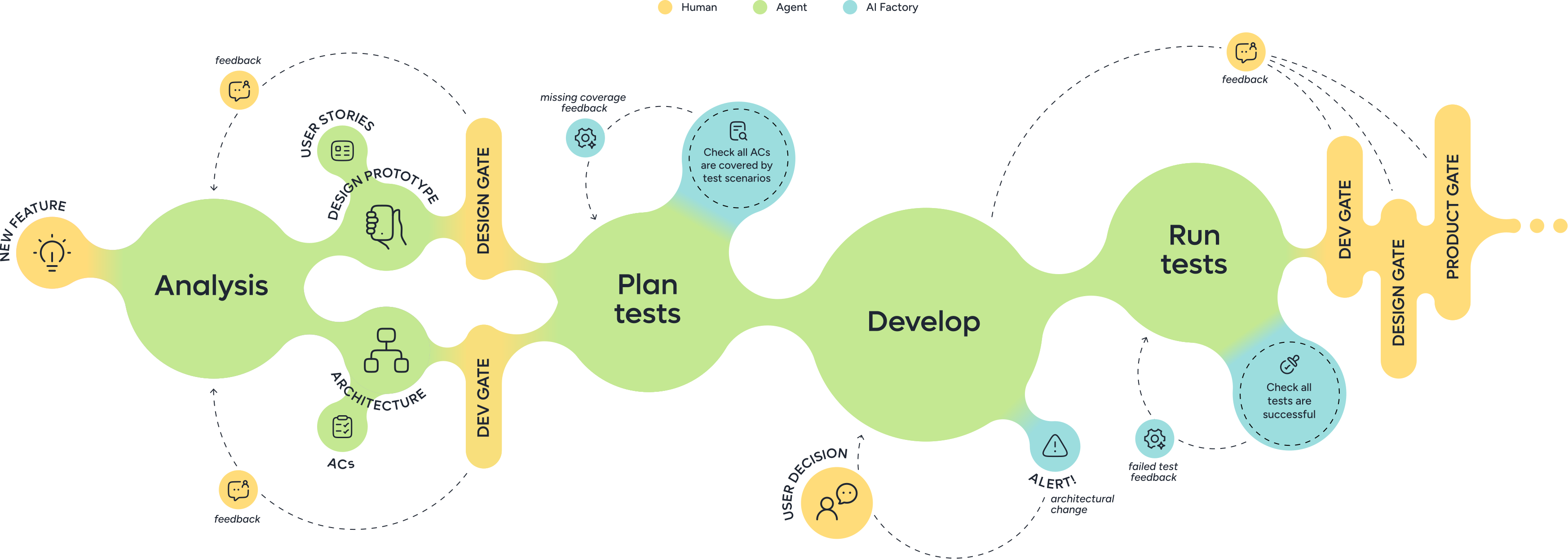
Agents, skills, rules and checks work within one shared, centralized process that becomes part of the code itself. The AI factory runs the workflow and brings people in when approvals, judgement or decisions are needed.
When the process becomes code
The development process isn't new: it already lives in guidelines, ticket workflows, review checklists and pull request reviews.
With software factories, it becomes code the system can run. Agents do the work, the AI factory checks it, and people govern the decisions. Change a rule or a step, and the whole factory adapts instantly.
AI factories beyond product delivery
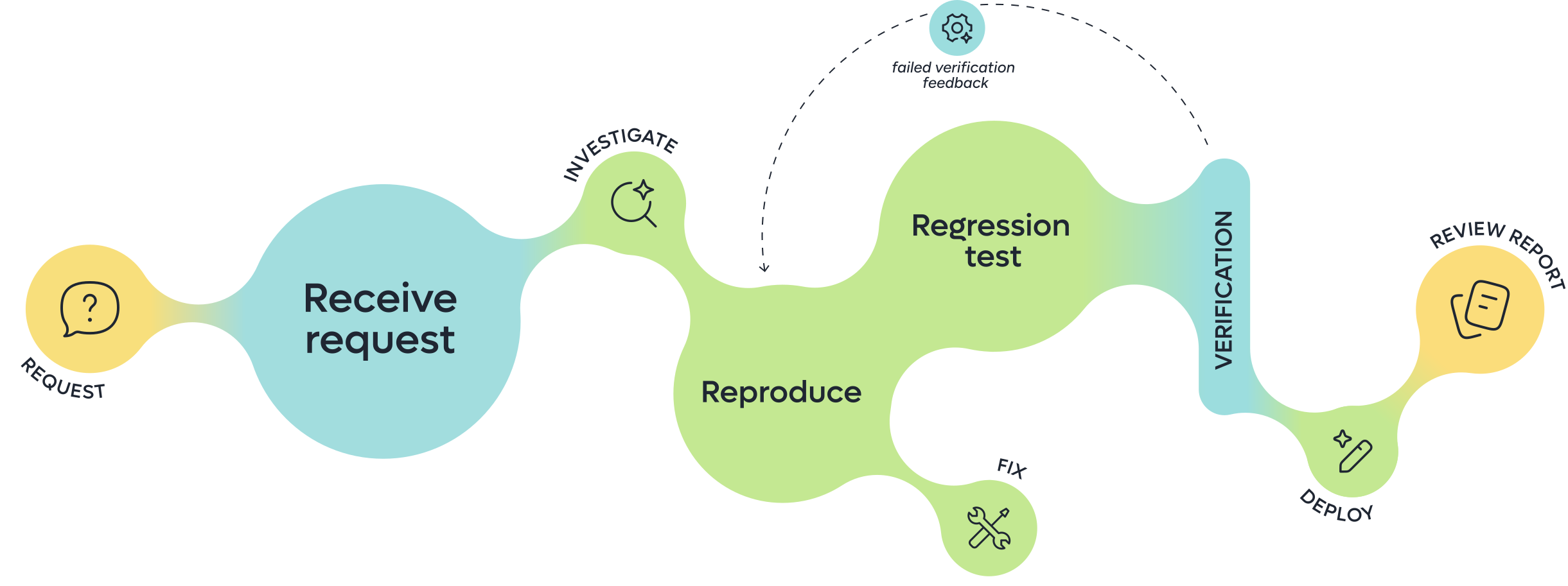
Application maintenance
When your software is stable and continuity matters
On stable software, many maintenance and improvement tasks follow repeatable patterns. The factory handles them systematically, leaving exceptions and decisions to the team.
Continuous quality
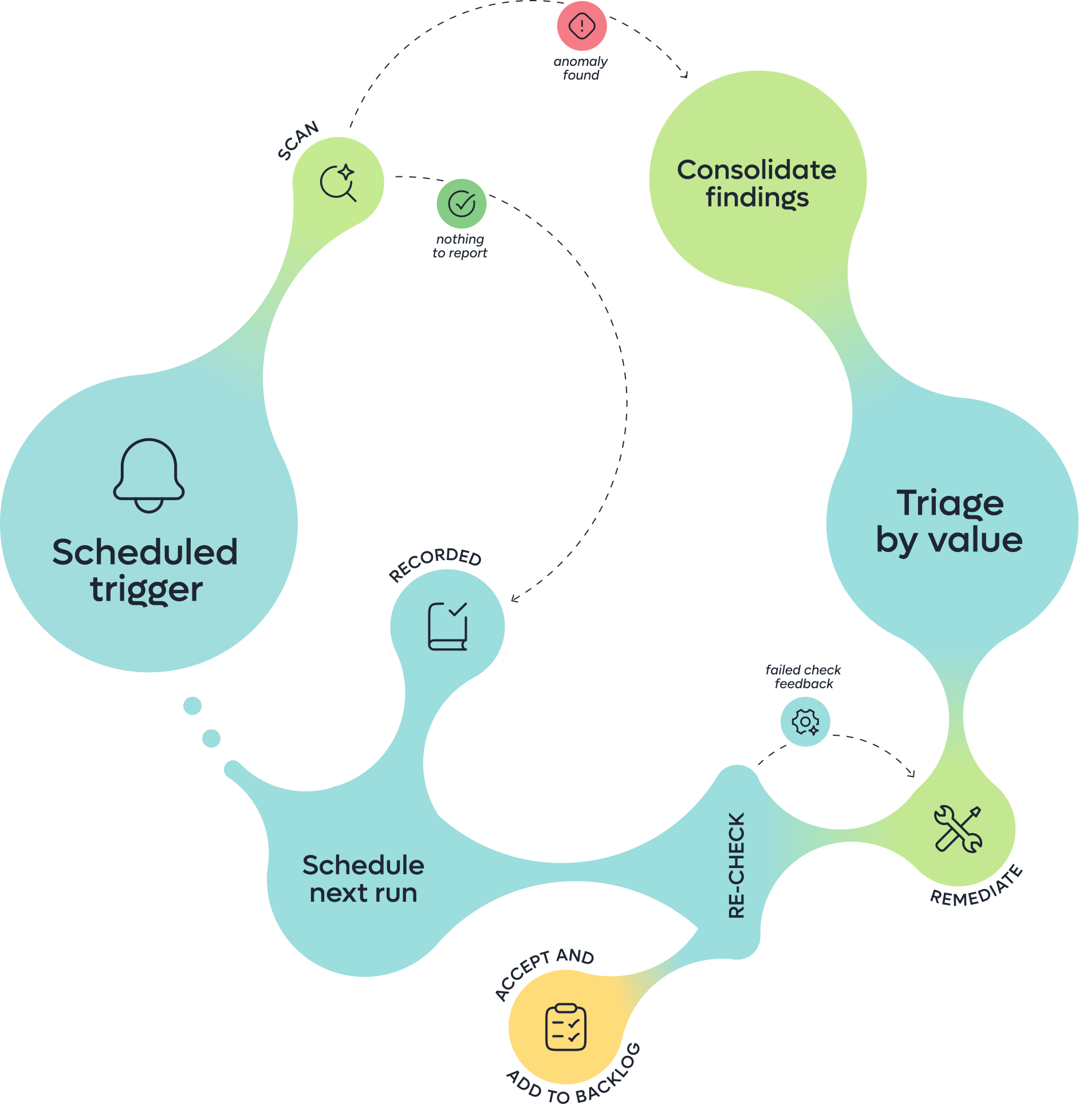
When quality can't wait for the next review
Agents kick in on a schedule, run planned checks and flag anything that doesn't look right. At regular intervals, the system makes sure each step and standard is still being followed.
The value built into an AI factory
AI factories aren't just about building software faster. They bring AI into the development process at a system level, making it more robust, collaborative, and easier to govern.
AI doesn't get bored with endless quality checks
With an AI factory, compliance checks and tests happen throughout the development process, not just at the end. Automated validation helps maintain high standards for security and code quality at a scale that would be hard to achieve manually.
Perfect for
Teams producing more and more AI-generated code without letting errors grow with it.
When the factory learns, the whole company benefits
Prompts, skills, configurations, and integrations don't stay on individual machines. The factory moves them into a shared, traceable infrastructure, so what the system learns becomes knowledge the whole team can build on.
Perfect for
Teams where each developer has their own way of working with AI, and valuable knowledge gets lost when people leave.
The factory makes more room for strategic decisions
The factory takes care of routine checks and formal verification, so human review can focus on the issues that really matter. That leaves devs and designers free to make the bigger calls, from architecture and new APIs to business requirements.
Perfect for
Teams that have sped up development with AI, only to find code review becoming the new bottleneck.
AI factories in action. The Utravel case study


AI Factory for Utravel
Utravel needed a modern approach to application maintenance. We built an AI Software Factory that speeds up fixes and improvements while raising quality.
Imagine enterprise complexity, governed by an AI factory.