Gruppo San Donato recognized the importance of making their platform more accessible to all its users. Our team of experts in UX, UI, and front-end analyzed their platform’s accessibility and provided a detailed roadmap to reach WCAG compliance.
Developing an accessible platform can be challenging; accessibility requirements are extensive and difficult to test and implement. The team at Gruppo San Donato was aware of this, so they hired us to perform an accessibility assessment on their website.
Their goal was to provide an inclusive experience for all users, regardless of their abilities, and demonstrate their commitment to diversity and inclusion.
A roadmap to accessibility
Our well-defined and replicable process to evaluate accessibility involves assessing each aspect of the platform, from its design and copywriting to the underlying code, ensuring that it met the accessibility standards required by the European Accessibility Act.
Then we prioritized the needed improvements according to their impact on accessibility and the effort needed to address them, creating a roadmap to follow to reach WCAG compliance.
Through our accessibility assessment, roadmap to implementation, and reusable test checklist, Gruppo San Donato is now able to improve the accessibility of its platform and provide a more inclusive experience for all users.
An accessible platform can also lead to numerous business benefits, such as improved customer satisfaction, increased engagement and loyalty, and a wider potential customer base.
Following the WCAG Guidelines
The Web Content Accessibility Guidelines (WCAG) are a set of internationally recognized standards that aim to make web content more accessible for individuals with disabilities. Developed by the World Wide Web Consortium (W3C), these guidelines provide clear recommendations on designing, coding, and structuring digital content to ensure it is usable and understandable for people with diverse abilities.
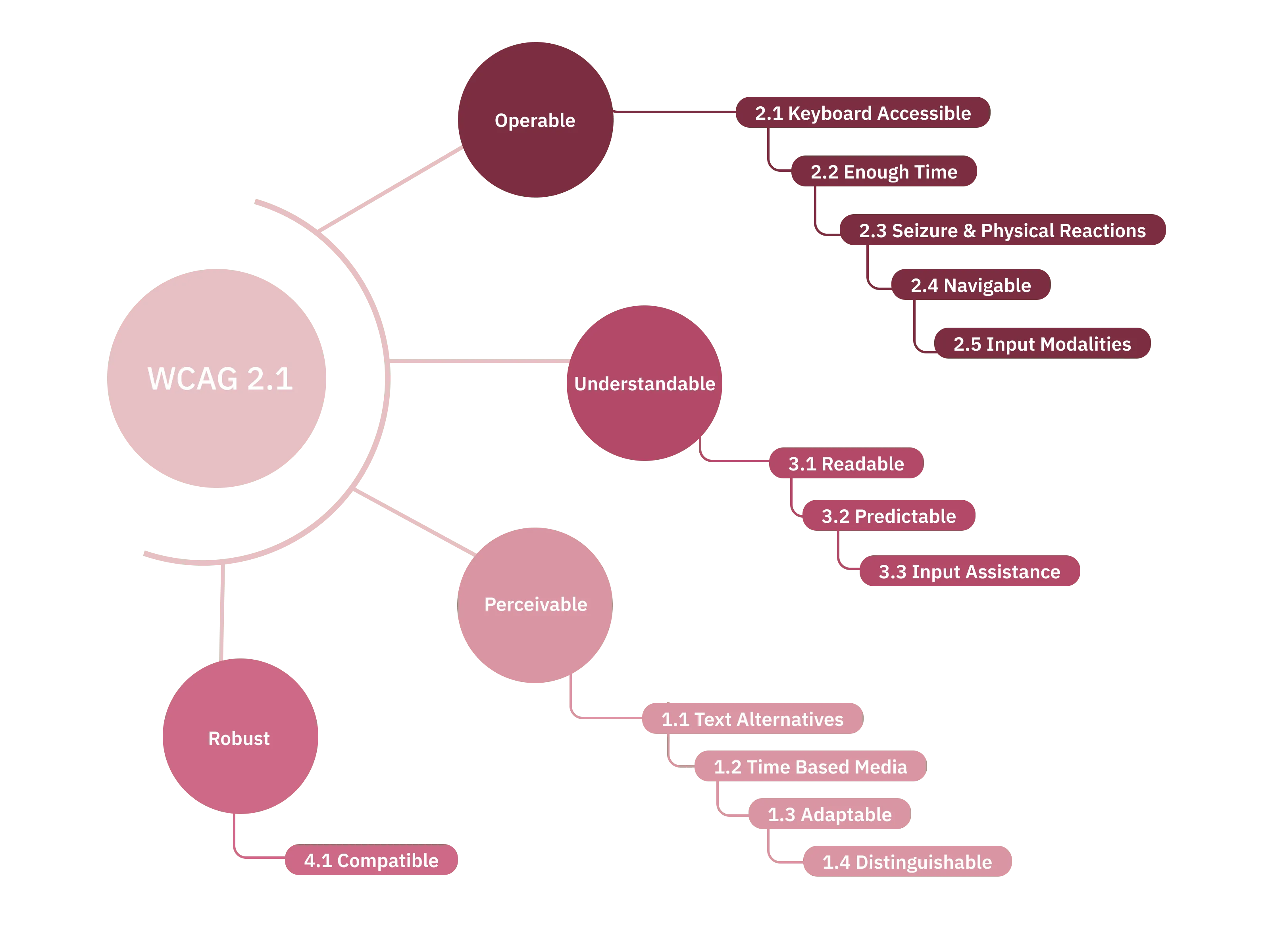
By adhering to WCAG, developers and designers can create inclusive online experiences, catering to users with visual, auditory, cognitive, and motor impairments, as well as enhancing overall usability for all users.
For these reasons, we started with WCAG guidelines to structure our assessment. Our report is based on their accessibility principles, which say that each element in a website should be:
- Perceivable
- Operable
- Understandable
- Robust
To ensure that Gruppo San Donato’s platform adhered to the Web Content Accessibility Guidelines (WCAG), our team of experts conducted a comprehensive evaluation of the website.
Testing accessibility is a mix of manual checks and automatic tests through different tools. For Gruppo San Donato’s platform, we executed a total of 97 different tests, involving the areas of coding, UI, and UX.
Throughout the testing phase, our team identified the instances where the platform did not meet the WCAG guidelines, highlighting areas that required improvement. For each violation, we provided actionable suggestions to address these issues and enhance the overall user experience for individuals with disabilities.
Some of the improvement suggestions included:
- Adding appropriate alternative text (alt text) to images, ensuring that users with visual impairments can understand the context and purpose of each visual element.
- Implementing keyboard navigation options to improve accessibility for users who cannot rely on a mouse or touchscreen.
- Ensuring that text and background colors have sufficient contrast, making content more readable for users with visual impairments.
- Using the correct ARIA labels to ensure that content is correctly interpreted by screen readers.
Creating an improvement roadmap
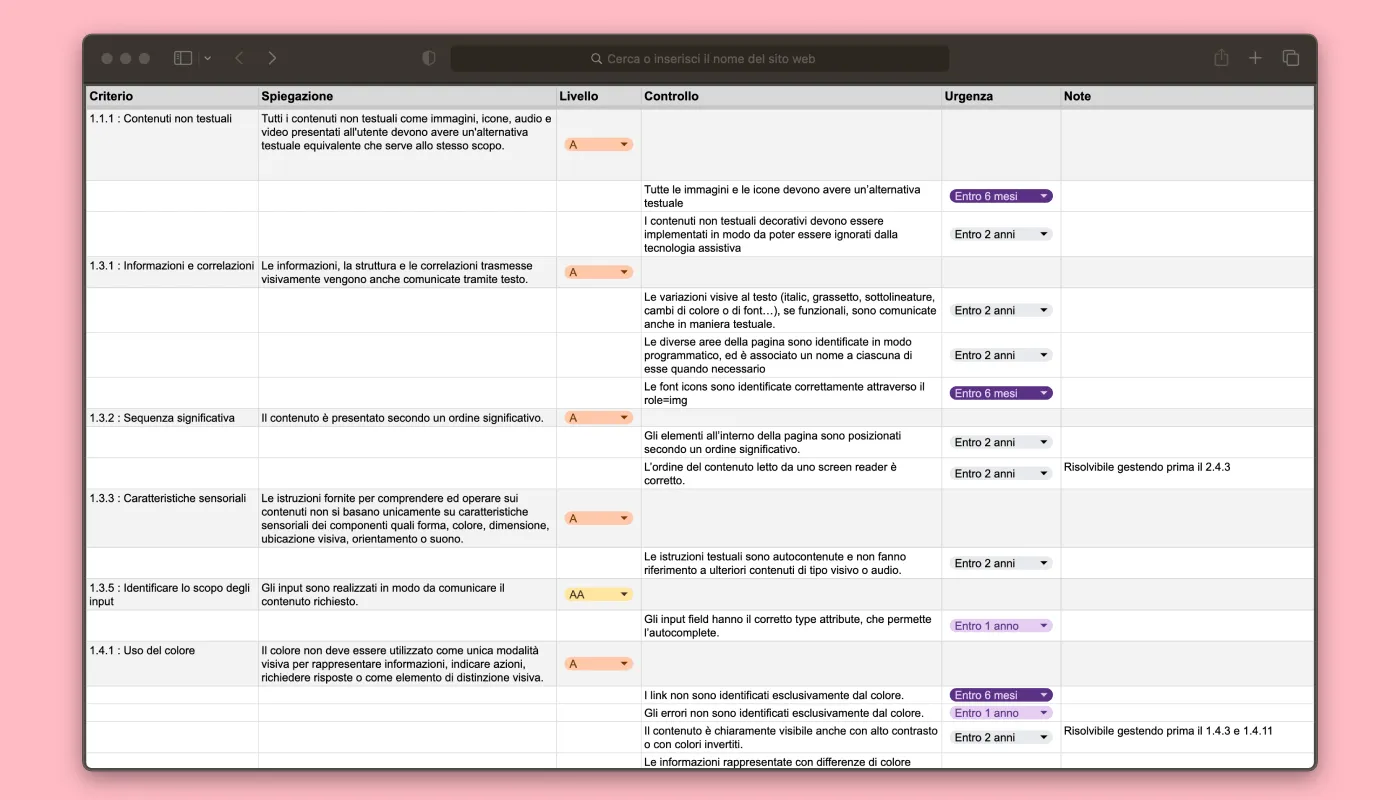
After the assessment, we collected all the necessary improvements and evaluated them to define their priority. We categorized the identified violations based on the WCAG level of compliance (A or AA), the seriousness of the violation, the frequency of occurrence on the platform, and the effort needed to resolve the issue. This gave us a clear understanding of the effort needed to reach accessibility compliance.
This prioritization allowed us to create a strategic roadmap for Gruppo San Donato that focused on addressing the most critical accessibility issues first, while also considering the resources needed to make these improvements.
The roadmap is structured in three steps to address the identified issues effectively. The first step focused on resolving critical violations that directly impacted the user experience for individuals with disabilities. These issues were deemed high priority due to their potential to exclude users from accessing essential content or features.
In the second step, we targeted violations with moderate impact and frequency of occurrence, aiming to enhance the platform’s overall user experience and to ensure WCAG compliance further. These improvements balanced the effort required for implementation with the benefits of increased accessibility.
Lastly, the third step concentrated on addressing minor violations and fine-tuning the platform’s performance. Although these issues were less severe, their resolution contributed to a polished and fully inclusive user experience.
By following this structured and prioritized roadmap, Gruppo San Donato is able to effectively tackle accessibility issues, ultimately creating a platform that meets WCAG standards and caters to the diverse needs of its users.
A more accessible experience
Through our Accessibility Assessment and roadmap to implementation, Gruppo San Donato is now able to improve the accessibility of their platform and provide a more inclusive experience for all users. We are proud to have partnered with Gruppo San Donato and to have played a role in making their platform accessible to all.